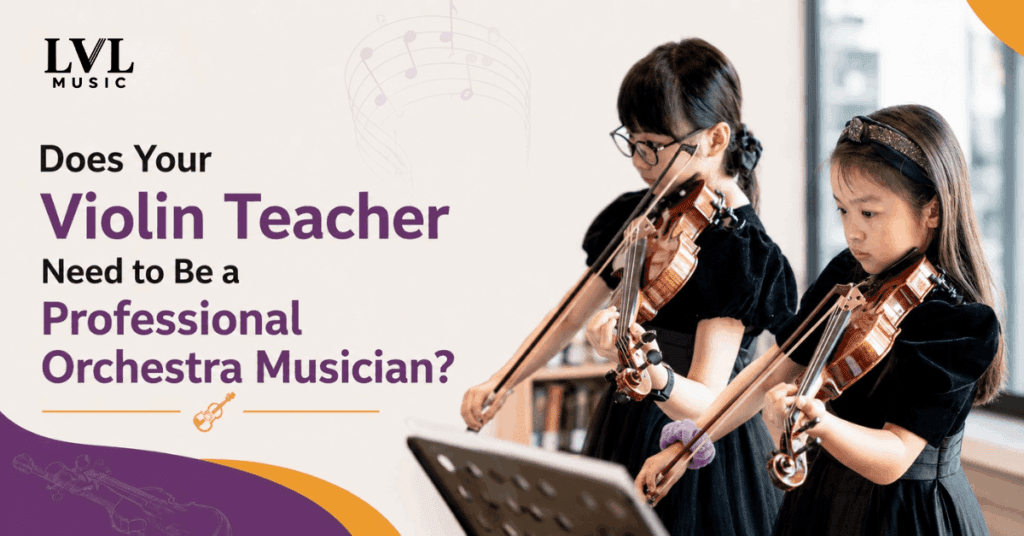
When parents look for a violin teacher in Singapore, one question often comes up: does the teacher need to be a professional orchestra musician?
It is understandable why this sounds attractive. A violinist who performs professionally has usually reached a high technical and musical level, and learning from an experienced performer can certainly be valuable.
But there is an important distinction: being an excellent violinist and being an excellent violin teacher are not exactly the same skill.
For most students — especially children and beginners — the better question is not simply where the teacher performs. It is whether the teacher can identify problems, explain technique clearly, communicate effectively and help the student progress consistently.
Professional Performer vs Good Violin Teacher
A professional orchestra musician develops a very demanding set of skills. These can include advanced technique, ensemble awareness, sight-reading, musical interpretation, discipline and the ability to perform consistently under pressure.
Those qualities can certainly contribute to good teaching.
However, teaching requires additional abilities:
- explaining difficult concepts in simple language;
- identifying why a student is struggling;
- adapting to different ages and learning styles;
- correcting posture and technique patiently;
- choosing appropriate repertoire;
- setting realistic goals;
- motivating students without creating unnecessary pressure; and
- communicating clearly with parents when appropriate.
A musician can therefore be outstanding on stage but less suited to teaching a complete beginner. Conversely, a dedicated violin teacher may not hold a full-time orchestral position but may be exceptionally skilled at helping students develop.
What Does Playing in a Professional Orchestra Tell You?
Playing professionally in an orchestra is still a meaningful credential.
Singapore’s flagship professional orchestra, the Singapore Symphony Orchestra, includes professional musicians across first and second violin, viola, cello and the other orchestral sections.
Membership in a professional orchestra generally indicates a high standard of instrumental performance and substantial ensemble experience.
That can be particularly valuable for advanced students who want insight into orchestral playing, professional performance, audition preparation or higher-level interpretation.
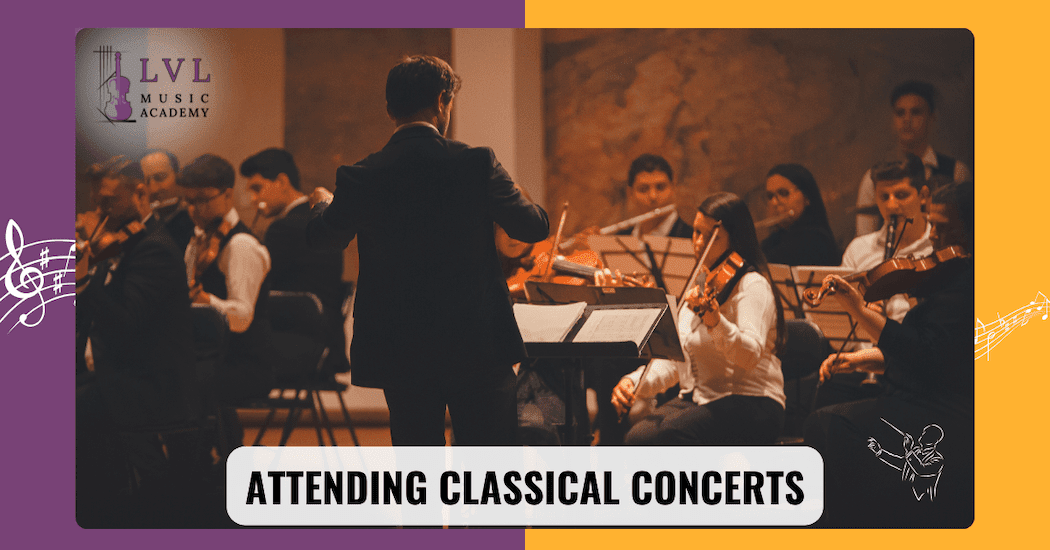
But it still does not answer the most important question for a parent: can this person teach my child effectively?
For Beginners, Teaching Ability Usually Matters More
A beginner violinist does not need the most advanced performer available. They need someone who can teach the fundamentals correctly.
Early violin learning involves developing habits in areas such as:
- posture;
- violin hold;
- bow hold;
- straight bowing;
- left-hand position;
- finger placement;
- rhythm;
- basic note reading; and
- listening and intonation.
If these foundations are not taught well, students can develop habits that become much harder to correct later.
For a young beginner, therefore, a patient teacher who understands how children learn may be more suitable than a highly accomplished performer who mainly works with advanced students.
Can a Professional Orchestra Musician Still Be an Excellent Teacher?
Absolutely.
Many professional performers are also excellent teachers. Some combine strong technical knowledge with clear communication, patience and considerable teaching experience.
The point is not that orchestra musicians make poor teachers.
The point is that professional performance credentials should be viewed as one factor rather than the deciding factor.
A parent should still ask how much teaching experience the musician has, which levels they normally teach and whether their approach suits the student.
What Should Parents Look For in a Violin Teacher?
Instead of judging a teacher primarily by an orchestra name or performance biography, look at how they actually teach.
1. Can the Teacher Diagnose Problems?
A good teacher should be able to see why something is not working.
If a student’s tone is poor, for example, the solution may involve bow speed, bow pressure, contact point, bow direction, posture or tension. Simply telling the student to “play better” is not useful.
Good teachers break problems down into manageable causes and solutions.
2. Can They Explain Technique Clearly?
The teacher may understand a technique instinctively after years of playing, but the student does not.
The ability to translate advanced knowledge into language a beginner can understand is a major teaching skill.
This becomes especially important with young children, who may need demonstrations, imagery and very simple physical instructions rather than long technical explanations.
3. Do They Adapt to the Student?
Not every student learns in the same way.
A child preparing for examinations may need a different approach from an adult learning for enjoyment. A confident student may respond well to direct feedback, while another may need more encouragement before being challenged.
A strong teacher adjusts the teaching method without lowering the standard.
4. Do They Build Strong Foundations?
Parents should be cautious of lessons that focus entirely on finishing pieces or moving quickly through examination grades.
Good violin teaching should continue to address posture, bow control, rhythm, intonation and technique as repertoire becomes more demanding.
At LVL, our violin lessons in Singapore follow a structured approach designed to build these foundations progressively.
5. Is the Teacher Consistent and Available?
Consistency matters, particularly for children.
A highly regarded performer may have concerts, tours, rehearsals and other professional commitments that affect teaching availability.
That does not automatically make them unsuitable, but parents should ask practical questions:
- Will lessons normally happen at the same time each week?
- How often does the teacher travel?
- What happens when the teacher is unavailable?
- Will another teacher regularly substitute?
A student may benefit more from a very good teacher who is consistently available than from a famous teacher whose schedule frequently changes.
What About Advanced Violin Students?
The balance can change as a student becomes more advanced.
An advanced violinist may benefit considerably from a teacher with substantial professional performance experience, particularly when working on:
- advanced repertoire;
- orchestral excerpts;
- audition preparation;
- advanced bowing techniques;
- interpretation and phrasing;
- ensemble skills; and
- performance preparation.
At this stage, a teacher’s professional performing experience may become more directly relevant to the student’s goals.
Even then, however, teaching compatibility still matters. A great performer who cannot communicate effectively may not be the right mentor for that particular student.
Should You Choose a Teacher Because They Play in the SSO?
Being a member of the Singapore Symphony Orchestra is certainly an impressive professional achievement.
But parents should avoid assuming:
“SSO musician = automatically the best violin teacher.”
That conclusion is too simplistic.
A more useful assessment would be:
- What level does the teacher normally teach?
- How much teaching experience do they have?
- Are they good at teaching children or beginners?
- Do they provide consistent weekly lessons?
- How do they correct technical problems?
- Does the student communicate well with them?
- Does their teaching style suit the student’s goals?
If the answers are strong and the teacher is also an experienced professional performer, that can be an excellent combination.
A Music School Gives You More Than One Teacher’s CV
Another point parents sometimes overlook is the wider environment surrounding the teacher.
A violin student’s development can involve more than the individual teacher. A well-run music school can also provide:
- a structured curriculum;
- school oversight of student progress;
- performance opportunities;
- ensemble experience;
- exam preparation when appropriate;
- alternative teachers if the student’s needs change; and
- instrument support.
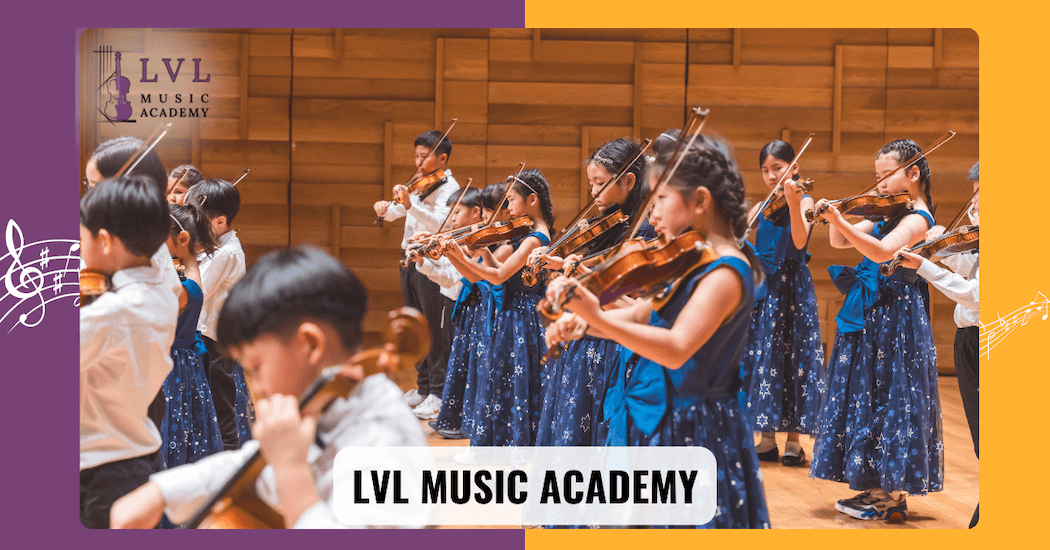
This is one reason we encourage parents to consider the quality of the whole learning environment, not only the most impressive name on a teacher biography.
If you are comparing schools, our guide on how to choose a violin school in Singapore explains the wider factors parents should consider.
The Instrument Can Matter Too
Even a very good teacher cannot fully compensate for an instrument that is uncomfortable or functioning poorly.
Beginners may struggle with an incorrectly sized violin, slipping pegs, old strings, bridge problems or a bow that is difficult to use.
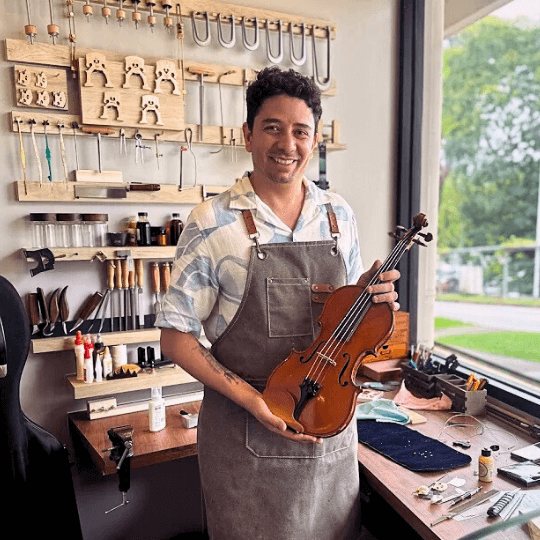
At LVL, the school operates alongside an in-house luthier workshop and violin shop, so students can obtain help when an instrument issue may be affecting their playing.
This helps teachers distinguish between problems caused by technique and those caused by the violin or bow itself.
What Should You Prioritise?
If you are choosing a violin teacher for yourself or your child, prioritise the following:
- Teaching ability — can they explain and correct effectively?
- Experience with the student’s level — beginners and advanced players have very different needs.
- Technical foundations — do they teach properly rather than simply work through songs?
- Communication and personality fit — does the student respond well to the teacher?
- Consistency — can regular lessons be maintained?
- Performance experience — particularly useful as students become more advanced.
Professional orchestra experience can therefore be a major strength, but it should sit alongside these other qualities rather than replace them.
Does Your Violin Teacher Need to Be a Professional Orchestra Musician?
No. A violin teacher does not need to be a professional orchestra musician to be an excellent teacher.
Professional musicians can bring valuable performance experience, advanced technique and musical insight. For advanced students, that experience can be particularly useful.
But for most learners, especially beginners and young children, teaching skill is more important than the orchestra printed on a teacher’s biography.
The right teacher is someone who understands the student’s level, identifies problems accurately, explains clearly, builds strong foundations and helps the student progress consistently.
If professional performance experience comes together with those teaching qualities, that is a strong combination. But parents should never choose a teacher based on a prestigious performing credential alone.
Finding the Right Violin Teacher in Singapore
LVL Music Academy provides structured violin lessons for children and adults in Singapore at our Bukit Timah music school.
Rather than matching students based solely on impressive biographies, the aim is to find a teacher whose experience, communication style and teaching approach suit the student’s level and goals.
A trial lesson is often the simplest way to assess that. Watch how the teacher communicates, what they notice about the student’s playing and whether the student leaves understanding what they need to work on next.